the endless trail of failure
Government failures throughout history often stem from systemic issues like corruption, poor resource allocation, overreach, and a failure to adapt to changing social or economic conditions. While history records many collapses and policy disasters, it also shows periods of reform and institutional adaptation.
Major Causes of Government Failure
- Corruption and Greed: Leaders prioritise personal wealth or elite interests over public welfare, leading to economic ruin and loss of public trust.
- Overreach and Imperial Overexpansion: Empires and states stretch their military and financial resources too thin, causing internal collapse.
- Economic Mismanagement: Poor monetary policies, hyperinflation, and heavy taxation crush the working populace and stall growth.
- Inflexibility: Governments fail to adapt to new technologies, cultural shifts, or environmental crises, making them obsolete.

Examples from History
- The Fall of Rome: Economic instability, military overspending, and corruption fractured the Roman Empire.
- The French Monarchy: Extreme inequality, debt, and food shortages sparked the French Revolution.
- The Soviet Union: Centralised economic planning, inefficiency, and political repression led to its eventual dissolution.
more recent failures
Over the last 50 years, successive UK governments have faced major policy and systemic failures. Key flashpoints include the 1992 Exchange Rate Mechanism crisis, the 2008 financial crash response, long-term public service strains from austerity, and the fallout from Brexit and pandemic governance.
Economic and Financial Crises

- Black Wednesday (1992): The Conservative government was forced to pull the pound out of the Exchange Rate Mechanism after failing to prevent its devaluation, destroying economic credibility.
- The 2008 Financial Crash: Regulatory failure and over-reliance on a deregulated financial sector forced the Labour government into multi-billion-pound bank bailouts and nationalisations.
- The 2022 Mini-Budget: The short-lived Liz Truss Conservative administration introduced unfunded tax cuts that crashed the pound, spiked mortgage rates, and triggered emergency market interventions.
Public Services and Infrastructure
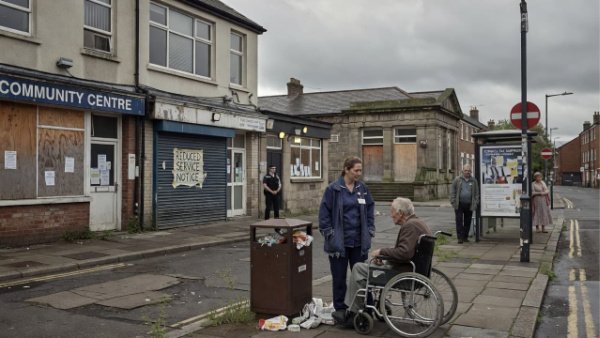
- Austerity (2010s): Deep, sustained spending cuts under coalition and Conservative governments severely weakened local government, social care, policing, and the justice system.
- NHS Pressures: Chronic under-resourcing, delayed capital investments, and social care gridlock led to record-high waiting lists and failing dentistry access.
- Housing Shortages: Decades of failure by both Labour and Conservative administrations to build adequate social and affordable housing resulted in a severe generational affordability and homelessness crisis.
Major Structural and Geopolitical Decisions
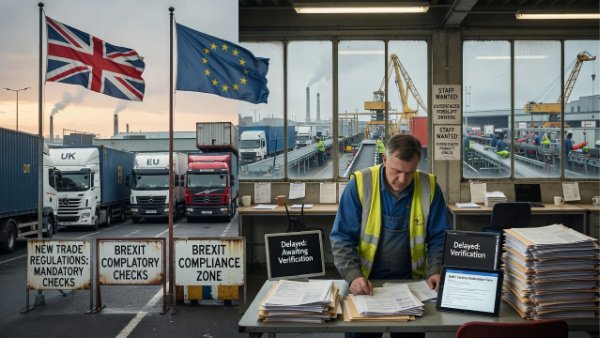
- Brexit (2016 onwards): Leaving the European Union introduced long-term non-tariff trade barriers, labour shortages, and sluggish productivity growth despite promises of economic renewal.
- Pandemic Procurement (2020–2021): The emergency response to COVID-19 saw billions spent on unvetted “VIP lane” contracts for personal protective equipment (PPE) that yielded unusable or delayed gear.
- Climate and Green Slippage: Repeated policy U-turns, mixed messaging on net-zero targets, and slow home-insulation rollouts stalled the UK’s infrastructure transition
Climate and Green Slippage highlights the growing friction between the UK’s long-term environmental commitments and its immediate operational execution. Frequent policy U-turns on key net-zero milestones—such as delaying phase-out dates for fossil-fuel vehicles and heating systems—have generated significant uncertainty for investors, private developers, and local authorities.
Compounded by contradictory public messaging regarding fossil-fuel licences, this indecision undermines long-term regulatory confidence. Furthermore, sluggish, fragmented rollouts of nationwide home-insulation and building-retrofit schemes have severely bottlenecked energy efficiency upgrades across millions of households.
Together, these regulatory shifts and implementation delays have disrupted supply chains, chilled green investment, and ultimately stalled the essential modernisation of the nation’s broader energy and housing infrastructure.
Slippage in UK Local Authority Climate Targets
In the UK, local authorities are facing intense friction in trying to meet local net-zero goals, leading to highly documented green slippage. Research shows that two-thirds of English councils are not confident they will meet their 2050 net-zero targets.
Examples of local slippage include:
- Political Deprioritisation: Policy changes at the ballot box have triggered direct rollbacks. A 2026 study by the Grantham Research Institute revealed that 7 out of 9 Reform UK-led local councils completely scrapped their climate targets or rescinded Climate Emergency Declarations, citing local economic savings.
- Infrastructure Deadlines Missed: National-to-local statutory deadlines are slipping. For example, despite a legal deadline for mandatory kerbside food waste recycling, data reveals that only 60% of responsible local authorities successfully provided the service, stalling completely at previous years’ levels.
- Planning Policy Gaps: An evaluation by the Royal Town Planning Institute (RTPI) found a massive “ambition gap” in newly emerging local development plans. Over half of emerging local plans failed to include required cooling and ventilation strategies to address climate overheating, while only 22% actually set concrete targets to reduce embodied carbon emissions in construction.
- Policy Inconsistencies: Funding shortages have forced councils to protect local transport revenue over climate objectives. More than a third of English councils that officially declared a “climate emergency” continue to support high-emission policies, such as local airport expansions and new road building.
How Industries Measure and Report This Delay
To prevent companies from hiding green slippage behind vague PR statements, global frameworks have evolved to make climate delays legally transparent. Rather than waiting until a 2030 or 2050 deadline fails, modern frameworks measure the trajectory of interim milestones.
Trajectory vs. Target Tracking
Industries use frameworks like the International Sustainability Standards Board (ISSB) standards (IFRS S1 and S2) to shift reporting from distant promises to active trajectories. Companies must disclose exact year-over-year transition plans. If a company’s carbon reductions fall below its stated path, the framework forces a metric adjustment, mathematically flagging the “slippage” to investors.
Mandatory “Comply or Explain” Mandates
Regulations like the UK government’s Sustainability Reporting Guidance and the EU’s Corporate Sustainability Reporting Directive (CSRD) strip away the ability to gloss over delays. If a company or public entity misses a milestone, it must legally trigger a “Comply or Explain” disclosure, detailing exactly why the milestone was missed, the financial roadblocks, and the corrective actions planned.
Double Materiality Assessments
Under CSRD standards, companies must conduct double materiality assessments. This forces businesses to report not only how climate change affects their balance sheets but also exactly how their delays (slippage) negatively impact the environment. For instance, delaying a supply-chain decarbonisation goal directly exposes a company to “transition risks” that must be reported to stakeholders as a material liability.
Assurance and Data Traceability
Voluntary reporting allowed companies to adjust baselines to mask delays. Today, mandatory frameworks enforce third-party audit and assurance requirements. Auditors check data traceability across Scope 1, Scope 2, and material Scope 3 emissions, meaning any upward drift or stagnation in emissions is caught and classified as an operational failure rather than a minor delay.
No government will ever solve all of our problems. Human societies face deep, ongoing challenges like scarcity, disease, conflict, and personal suffering that no political system can fully fix. [1]
Why Governments Fall Short
- Complex Problems: Many issues have no single right answer or easy fix.
- Human Nature: Leaders and citizens are flawed, selfish, or short-sighted.
- Limited Power: Laws and money cannot change personal choices or fix nature.
- New Conflicts: Fixing one problem often creates a new one elsewhere.
brexit… the farage folly
Nigel Farage drew on populist messaging, anti-establishment frustration, and a sharp emphasis on immigration to persuade a majority of British voters to support Brexit in 2016. Instead of leaning solely on technical economic arguments, his political approach tapped into cultural grievances, a common man persona, and provocative imagery to rally voters who felt overlooked by mainstream politicians.
The Core Tactics of the Leave Campaign
The Immigration Pivot
When general economic debates stalled, Farage and the unofficial Leave campaigns shifted the national conversation heavily toward border control, using controversial visuals like the Breaking Point poster to stoke fears around high migration numbers.
The Anti-Establishment Persona
Farage framed the referendum as a battle between everyday working people and a distant, self-interested political elite in London and Brussels.
“Taking Back Control”
This simple, highly effective three-word slogan condensed complex international trade and legal relationships into a powerful emotional demand for national sovereignty.
The “Pub Bore” Authenticity
By projecting the image of an approachable, pint-drinking regular rather than a polished, traditional politician, Farage successfully connected with audiences who distrusted institutional experts.
While mainstream economists and political leaders warned of severe downturns, the Leave movement’s emotional and identity-driven narrative proved more resonant at the ballot box. Critics argue it relied on misleading promises and xenophobic undertones, while supporters maintain it was a necessary democratic disruption to reclaim national autonomy.