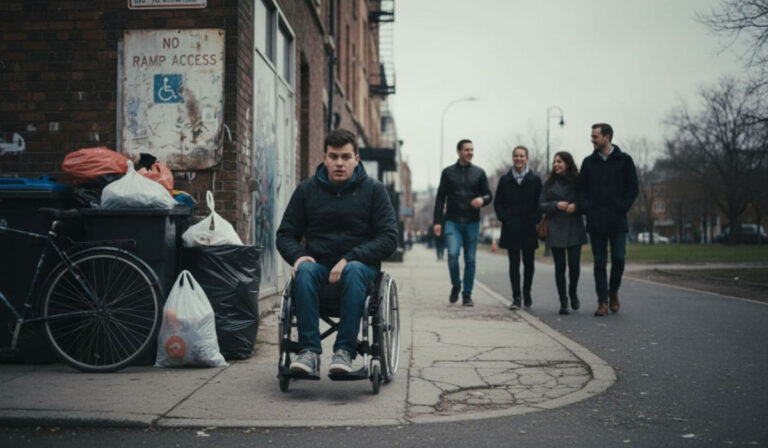
no room to swing a cat (or turn a wheelchair!)
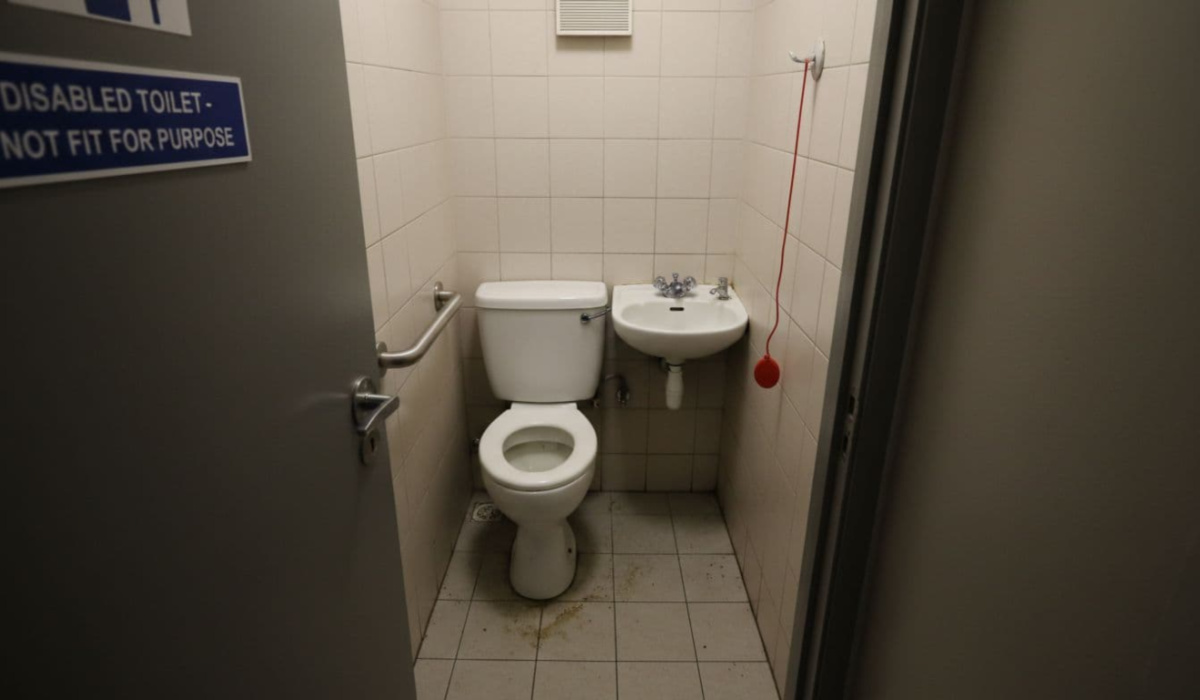
Wheelchair‑accessible disabled toilets are one of society’s favourite decorative gestures. They’re like those ornamental cushions no one is allowed to use—lovely to look at, utterly pointless in practice. The sign on the door promises accessibility; the room behind it whispers, “Good luck, friend.”
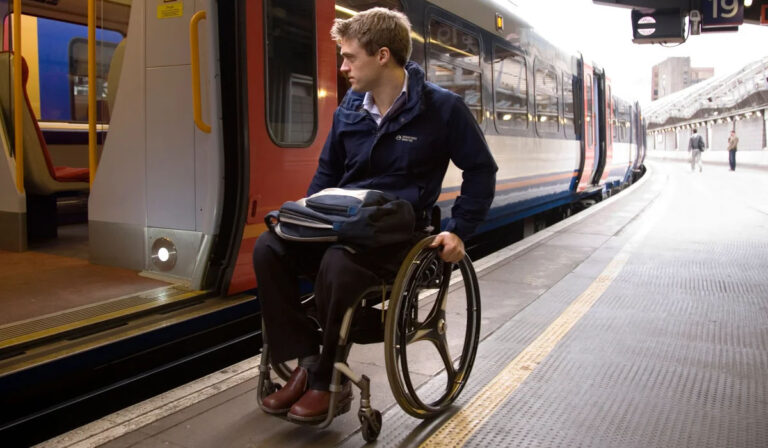
Transport hubs are masters of this art. You roll up to an “accessible” toilet only to discover a space so tight it feels like someone measured a wheelchair using vague memories and optimism. Turning inside becomes a slow, balletic performance of Wheelchair Tetris, complete with the thrilling risk of knocking over the bin, the sink, or the emergency cord—helpfully tied up out of reach, presumably for aesthetic reasons.
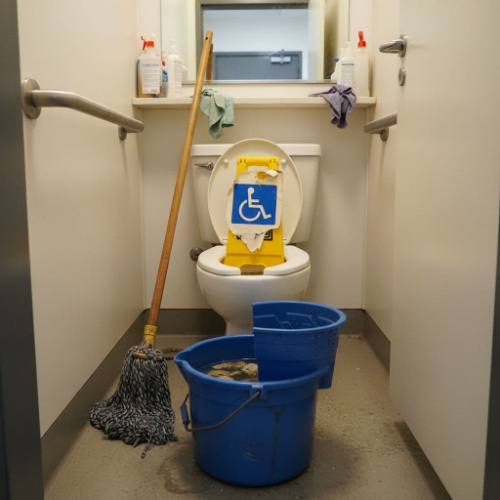
Pubs and cafés, of course, refuse to be overshadowed. Many offer generously sized accessible toilets—perfect for storing mops, crates of beer, highchairs, and whatever else the staff couldn’t be bothered to put elsewhere. Nothing says “inclusion” like a mop bucket guarding the grab rails. And then there’s the inward‑opening door, a design choice that suggests the architect has never encountered a wheelchair but has strong feelings about unnecessary convenience.
The grab rails themselves are often placed with the carefree spontaneity of modern art. Too high, too low, or positioned at an angle that seems to say, “We tried, but not very hard.”
And the best part? None of this requires futuristic technology or groundbreaking innovation. Just space. Actual space. And a designer who has met at least one wheelchair user in their lifetime.
Until then, we’ll continue applauding the effort while gently noting that “accessible” should mean usable, not theoretical.