it’s friday. . . that’ll do!
The Ramp That Deserves a Round of Applause (Apparently)
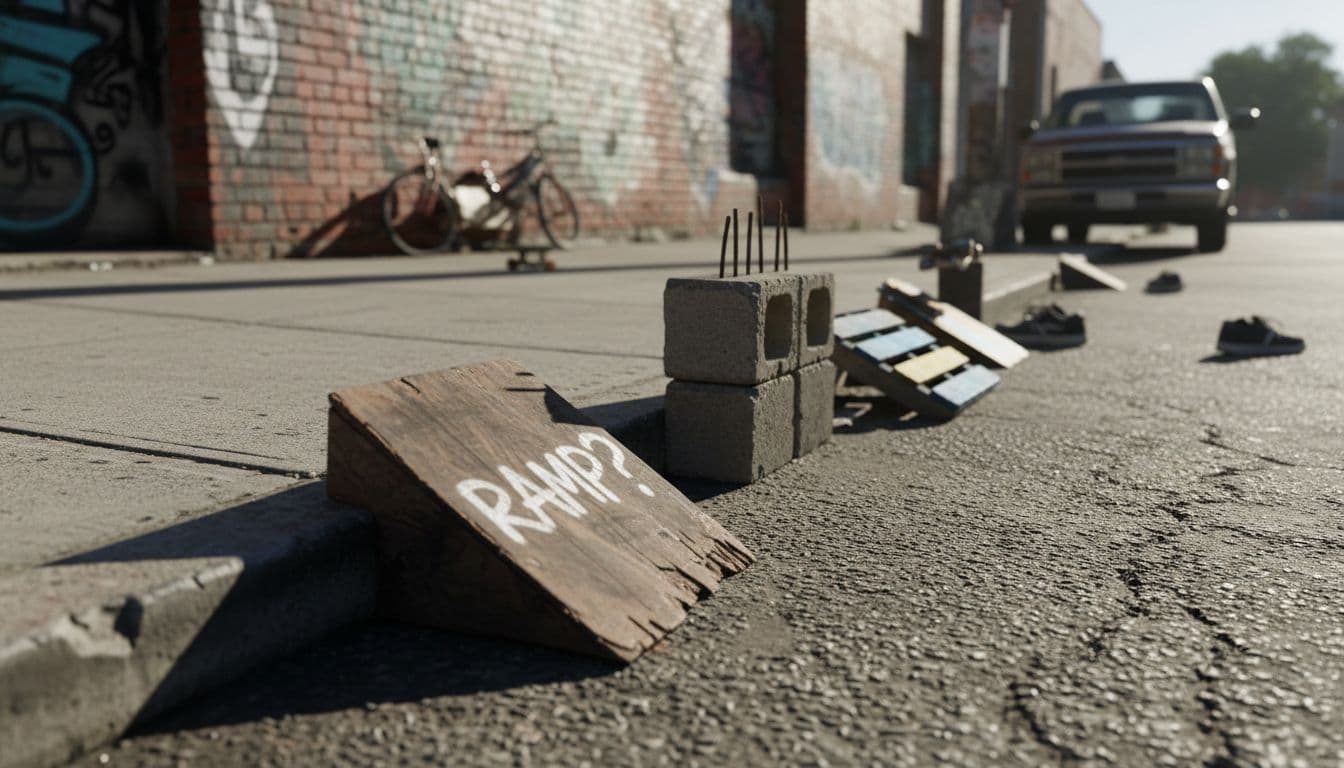
There’s a special kind of confidence many shops possess—the kind that allows them to erect something vaguely slanted and triumphantly declare it a ramp. You’ve seen them. The proud little wedges of wood or concrete that seem designed less for wheelchair access and more for testing the limits of optimism.
Some shops genuinely believe they’re doing good by installing these creations. And to be fair, the intention is lovely. The execution, however, often resembles a school project completed five minutes before the deadline. Too steep, too narrow, too slippery, or leading directly into a doorframe—each one a unique masterpiece in the gallery of almost-accessibility.
Then there’s the classic “ramp” that ends in a step. A step. As though the designer got bored halfway through and thought, “Close enough.” Or the ramp that’s technically wide enough for a wheelchair—provided the wheelchair is imaginary. And let’s not forget the ramps so steep they could double as ski jumps. Nothing says “welcome” like a 45‑degree incline.
Shops often beam with pride about these efforts, pointing them out as though unveiling a new wing of the Louvre. Meanwhile, wheelchair users approach with the same enthusiasm one reserves for a surprise maths exam. It’s accessibility theatre: lots of props, very little function.
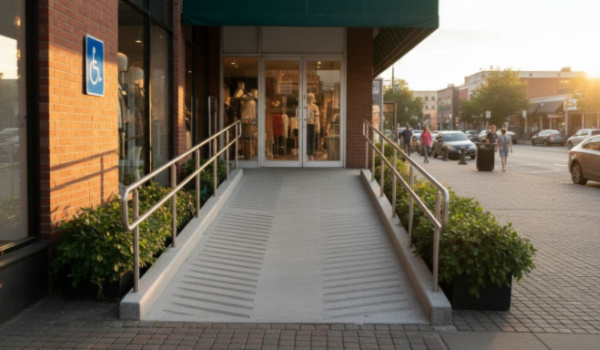
The truth is, proper ramps aren’t complicated. They require space, planning, and the radical idea that disabled customers deserve to enter a shop without risking a physics experiment. A ramp should be a pathway, not an obstacle course.
Until that becomes the norm, we’ll keep applauding the effort—politely, of course—while gently suggesting that “doing good” should also include “doing it properly.”